UNESCO Virtual Museum of Stolen Cultural Objects
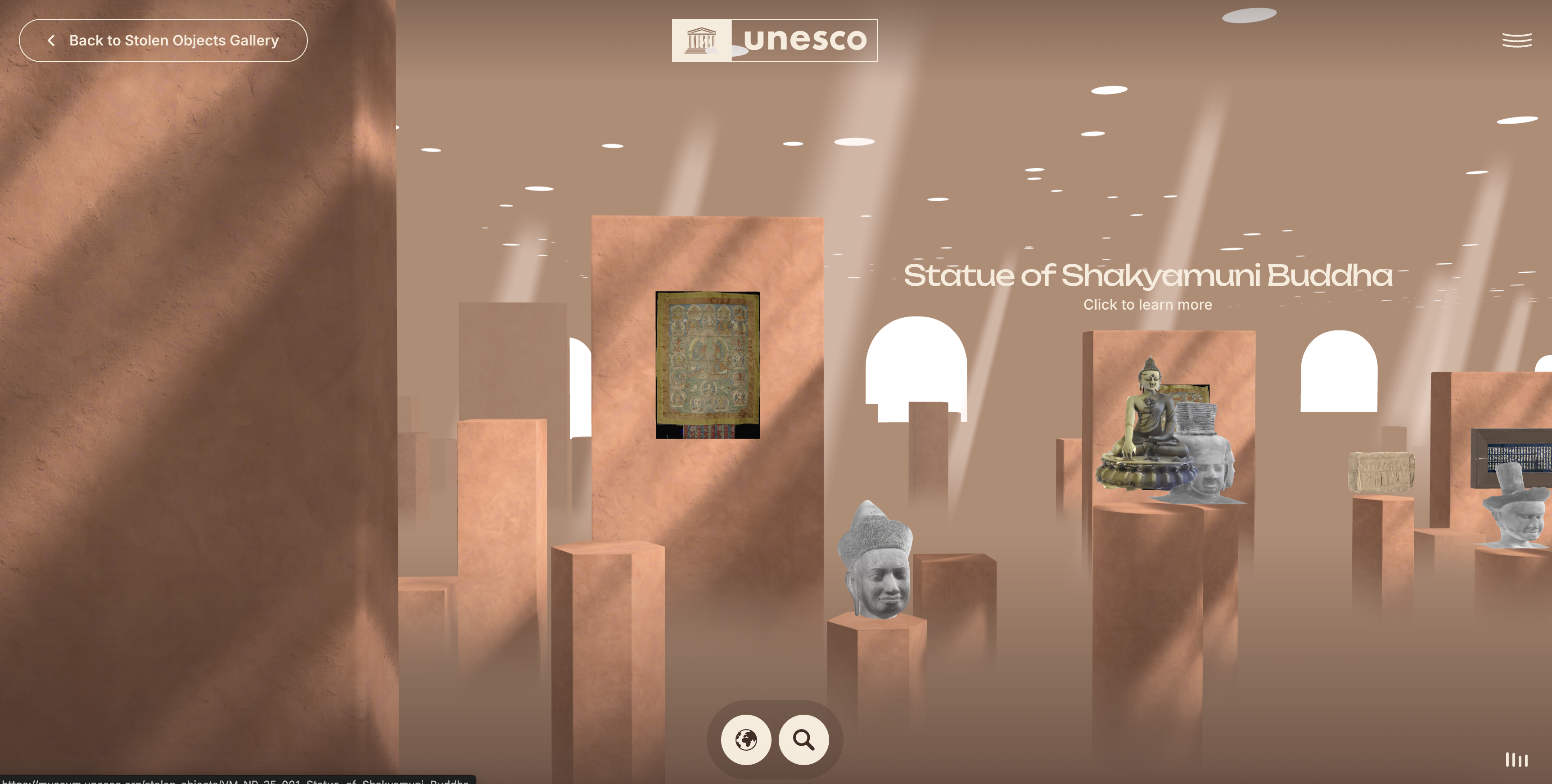
A digital space to learn, connect with, and share the stories of stolen cultural heritage. UNESCO's virtual museum is what a cultural institution looks like when its digital presence does justice to its mission — multilingual, interactive, 3D-driven, and reachable from anywhere in the world.
This is the kind of virtual museum website that makes the case for digital heritage at the highest level. If you are responsible for your institution's communications, audience development, or digital strategy, this is the reference example to put in front of your board, your director, or your grant funder.
What This Is
The UNESCO Virtual Museum of Stolen Cultural Objects is a multilingual interactive web platform showcasing artifacts that have been stolen from their countries of origin — a digital archive built on UNESCO's mandate under the 1970 Convention on the means of prohibiting and preventing illicit import, export, and transfer of ownership of cultural property.
The site organizes thousands of artifacts by region — Asia and the Pacific, Africa, Arab States, Europe and North America, and Latin America and the Caribbean — and lets visitors explore each piece individually with high-resolution 3D models, contextual narratives, and provenance histories.
From a web design standpoint, it is doing what every cultural institution's website should be doing in 2026: treating the digital experience as part of the mission, not as a brochure for the building.
What Makes This Format Work for Cultural Institutions
Who This Reference Is For
If you are one of these decision-makers at a museum, foundation, cultural NGO, or heritage institution, this is the kind of project you should be quietly pulling up in your next budget conversation.
Why This Matters Now — Not Next Strategic Cycle
Cultural institutions have spent the last decade catching up to the digital expectations their visitors already had. The gap between leading museums (Smithsonian, Louvre, Tate, Met, British Museum) and everyone else is now defined by what their websites do — not what their galleries hold.
- Visitor expectations have permanently shifted. A visitor who can explore a 3D Khmer artifact from her phone before booking flights is a visitor who books flights. A visitor who lands on a static catalog page is a visitor who bounces.
- Foundation grants increasingly require digital deliverables. NEH, Mellon, Getty, IMLS — major US cultural funders now explicitly fund digital engagement components alongside traditional preservation. A digital deliverable is a checkbox on the grant application now.
- Younger audiences will never enter the building first. They will discover you online, share you online, donate online — or not engage at all. The website is no longer an addition to the museum; it is a major surface of the museum.
- Cultural diplomacy is digital. If your collection has international significance, your website is the front door for governments, embassies, and partner institutions across timezones you can never staff.
- Search engines reward depth. Static gallery pages don't rank for cultural heritage searches. Rich, interactive, multilingual content does — and it compounds for years as the only entry point new audiences will ever take.
The Format Comparison Every Decision-Maker Needs
Walk into the next budget meeting with this table. It's the cleanest way to explain why a $15,000 interactive 3D module is a more responsible spend than $50,000 of additional brochure printing or photography refresh.
| Format | Visitor Time on Site | International Reach | Donor Shareability |
|---|---|---|---|
| Static Gallery Page | 30–60 seconds | Limited (English only) | Low |
| PDF Catalog Download | Read offline (uncounted) | Static document | Moderate (download required) |
| Standard Image Gallery | 1–2 minutes | Image-only language gap | Moderate |
| Interactive 3D Virtual Museum | 8–14 minutes typical | Truly global (multilingual) | High (link-shareable interactive) |
What an Interactive 3D Museum Website Delivers
- Global reach without geographic limit. Your institution becomes accessible to anyone with a browser, in their own language, on their own time.
- Mission-aligned digital deliverable. Donors, board members, and grant funders see your mission expressed digitally — not just described in an annual report.
- SEO compound interest. Multilingual, content-rich, deep-link friendly websites accumulate search traffic for years. A page-by-artifact architecture is search engine gold.
- Press and partnership pull. A serious digital experience makes your institution the one journalists, partner museums, and cultural attaches choose to cite.
- Future-proof against physical disruption. Pandemics, conflicts, closures — institutions that built digital depth before they needed it kept their mission alive through years their galleries couldn't open.
The Budget Conversation You Can Actually Win
A full virtual museum like UNESCO's is a multi-year, multi-team effort. That is not what most museums need to start. You don't need the full UNESCO platform — you need a single proof-of-concept interactive 3D module on your existing website that demonstrates what your institution could become.
🎯 Realistic Pilot Scope — One Featured Collection
This is the kind of scope a Director of Communications, Director of Digital, or Major Gifts Officer can approve without escalating to the board. It demonstrates what a full virtual museum could become — and gives the institution real assets to evaluate against grant funding cycles, donor conversations, and the next strategic plan.